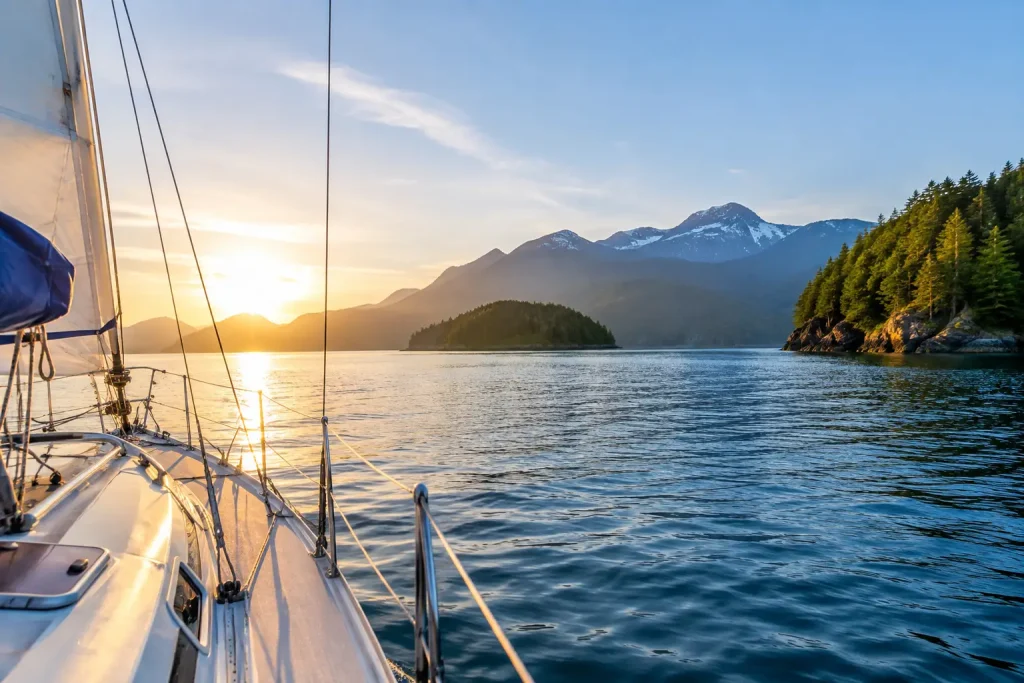
A calm morning off the Gulf Islands can turn into a demanding afternoon at an active pass, with current building beneath the hull and a fresh breeze filling in from the Strait of Georgia. That contrast is exactly why the best sailing destinations BC has to offer are more than pretty stops on a chart. They are places that reward good planning, sound boat handling, and the judgment to change the plan when conditions say otherwise.
British Columbia offers a lifetime of cruising grounds, from protected island anchorages close to Vancouver to remote inlets where self-sufficiency matters. For new sailors, the most rewarding route is not necessarily the most remote one. It is the one that matches your experience, your boat, the season, and the time you have to enjoy it.
What Makes a BC Sailing Destination Worth the Passage
A great destination needs more than a scenic shoreline. Look for a reasonable weather window, reliable shelter for the forecast, room to maneuver at the dock or anchorage, and a route that does not force you through difficult tidal waters at the wrong time. In BC, currents, rapids, wind funnels, and limited daylight can turn a short distance into a serious passage.
The best trips also leave room for the unexpected. A cruise built around a rigid arrival time can tempt a skipper to press on in poor visibility or rising wind. Give yourself a weather day, carry enough provisions, and know where your alternate anchorages are before you cast off.
8 Best Sailing Destinations in BC
1. Gulf Islands National Park Reserve
For many sailors, the southern Gulf Islands are the natural first answer. The area offers sheltered water, attractive coves, welcoming marinas, and enough route options to suit a long weekend or a full week afloat. Salt Spring, Galiano, Pender, Saturna, and Mayne islands each have their own character, from lively village stops to quiet anchorages under arbutus-covered bluffs.
This is excellent country for building practical cruising confidence. You can practice sail handling, anchoring, docking, and passage planning without immediately committing to an exposed offshore run. Do not mistake accessible for effortless, though. Boundary Pass and nearby straits can become uncomfortable quickly when wind opposes current, and ferry traffic deserves constant attention.
2. Princess Louisa Inlet
Princess Louisa Inlet is one of the great rewards of coastal cruising. The approach through Jervis Inlet is dramatic, and Chatterbox Falls at the head of the inlet remains a memorable destination for sailors who have worked their way north from the Vancouver area.
The trade-off is commitment. It is a longer trip than the Gulf Islands, fuel planning matters, and the inlet’s steep terrain can influence local wind. The entrance at Malibu Rapids requires careful timing around slack water. This is a destination best enjoyed by crews who are comfortable with tidal planning, close-quarters maneuvering, and several days away from easy resupply.
3. Desolation Sound
Warm summer water, high mountain scenery, and deeply indented shorelines have made Desolation Sound a classic BC cruising ground. Prideaux Haven, Tenedos Bay, and the surrounding coves give crews plenty of places to anchor, explore by dinghy, and settle in for an unhurried evening aboard.
Its popularity is both its strength and its limitation. In peak summer, favorite anchorages can fill early, especially during stable weather. A capable skipper arrives with alternatives and does not depend on finding a particular mooring buoy or protected corner. Shoulder-season cruising brings more solitude, but also cooler weather and shorter days.
4. The Sunshine Coast
The Sunshine Coast offers an ideal blend of convenience and genuine coastal character. Howe Sound, Gibsons, Sechelt Inlet, Pender Harbour, and the waters toward Lund can be shaped into a flexible itinerary with good opportunities for marina stops and protected overnight choices.
This is a fine area for families and newer crews because the trip can be adjusted without losing its sense of adventure. Still, Howe Sound deserves respect. Strong outflow winds can arrive with little welcome, particularly in cooler months, and afternoon thermal winds can make a relaxed sail more energetic than expected. Check the forecast closely and reef before you need to.
5. Vancouver Harbour and Indian Arm
Not every worthwhile sail requires a week away. Vancouver Harbour and Indian Arm offer a striking change of scene within reach of the city, combining working-waterfront awareness with steep-sided wilderness. Indian Arm can feel remarkably remote once you are north of the harbor approaches.
It is also a superb place to sharpen situational awareness. Commercial traffic, seaplanes, ferries, restricted areas, and busy recreational traffic make clear communication and a proper visual watch essential. For sailors learning the habits that support safe coastal cruising, this is real-world seamanship close to home.
6. The Broughton Archipelago
North of Campbell River, the Broughton Archipelago offers a maze of islands, coves, and channels that rewards crews ready for a more independent cruise. Wildlife sightings can be exceptional, and the sense of distance from city life is immediate. Small marinas and historic resorts add welcome opportunities to replenish supplies or share stories with fellow boaters.
The passage north requires more planning than a Gulf Islands holiday. Johnstone Strait can be boisterous, and the timing of major tidal gates affects the entire itinerary. This is where navigation, weather interpretation, and conservative decision-making become just as valuable as sailing skill.
7. Clayoquot Sound
For sailors drawn to the wild Pacific coast, Clayoquot Sound is a remarkable destination. Ancient rainforest, broad beaches, sea stacks, and open-water horizons create a different kind of BC cruising experience. Tofino provides a useful service stop, while the wider sound offers places to anchor and explore when conditions allow.
The key phrase is when conditions allow. Pacific swell, fog, exposed entrances, and rapidly changing weather make this less forgiving than the inside waters. A crew should have dependable equipment, a strong weather routine, and the confidence to stay put when the forecast is not right. The scenery is spectacular, but it never justifies pushing beyond the crew’s ability.
8. Barkley Sound
Barkley Sound, south of Clayoquot Sound, is another outstanding west coast choice for experienced cruisers. Its islands and protected pockets can provide welcome shelter after an ocean passage, while the outer coastline delivers the raw beauty many sailors hope to find on Vancouver Island.
It is a destination where preparation shows. Review entrance conditions, understand your anchoring options, carry appropriate safety gear, and plan for poor visibility. For crews with coastal navigation training and enough sea time to recognize their limits, Barkley Sound can be one of the most satisfying passages on the coast.
Match the Destination to Your Experience
There is no prize for choosing the hardest route. A new sailor may gain more from a well-planned Gulf Islands cruise than from a rushed attempt at an ambitious northern itinerary. An intermediate crew may be ready for Desolation Sound or Princess Louisa Inlet after building experience with tides, anchoring, night preparation, and weather decisions. The west coast belongs later in the progression, when the boat, crew, and skipper are prepared for its added exposure.
Formal training helps turn destination dreaming into capable cruising. Practical instruction should include more than sail trim and knots. It should build confidence with tidal calculations, chartwork, VHF procedures, docking, reefing, man-overboard response, anchoring, and the judgment to choose a safer alternative. At Capt. Mac’s School of Seamanship, that kind of learning happens aboard a 42-foot yacht, where decisions have real context and students can see how the pieces of a cruise fit together.
Before You Leave the Dock
A successful BC cruise begins with a conservative plan. Study the marine forecast and tides, but also understand what they mean for your specific route. Identify your primary destination, at least one alternate, and the points where you must make a go-or-no-go decision. Confirm fuel, water, food, ground tackle, navigation equipment, and communication gear before departure rather than assuming a marina will solve the problem later.
Most importantly, keep the crew involved. Assign a lookout, discuss the day’s route, explain how you will handle traffic and docking, and make sure everyone knows where safety equipment is kept. Calm, clear teamwork makes even a modest passage more enjoyable.
BC’s finest cruising grounds will still be there tomorrow. Choose the passage that lets you arrive with enough margin to enjoy the anchorage, cook a good meal aboard, and watch the evening settle over the water with the quiet confidence that you made sound decisions all day.