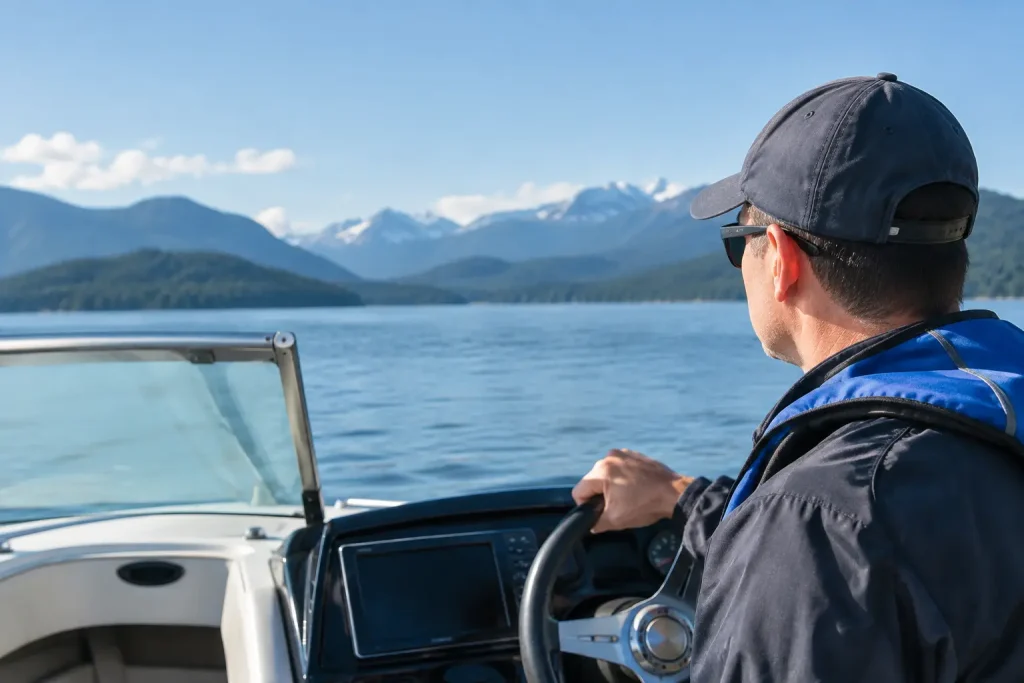
A Pleasure Craft Operator Card is easy to mistake for a boating license. It is not. Understanding the PCOC certification requirements is the first step toward operating a powered recreational boat legally in Canada, but the card itself is only a foundation. Real confidence on the water comes from learning how to handle a vessel, read conditions, make sound decisions, and look after the people aboard.
For new boaters in Vancouver and along the BC coast, that distinction matters. A calm afternoon in protected water can change quickly when wind, current, commercial traffic, and cold water are all part of the picture.
What Is a PCOC?
PCOC stands for Pleasure Craft Operator Card. It is commonly called a boating license, but it is actually proof that the holder has completed a Transport Canada-accredited boating safety exam. The card demonstrates basic knowledge of Canadian boating rules, safety equipment, navigation markers, environmental responsibilities, and emergency procedures.
A PCOC is intended for the operator of a pleasure craft fitted with a motor. That includes a powerboat, a personal watercraft, and a sailboat when it is being operated under power. If you plan to rent, buy, borrow, or charter a motorized recreational boat in Canada, carrying proof of competency should be part of your pre-departure routine.
The card is federally recognized across Canada and does not expire. Once earned, it stays with you. That makes it a worthwhile early step for anyone who expects boating to become more than a one-time summer outing.
PCOC Certification Requirements: What You Need to Do
The basic process is straightforward. You must take an accredited boating safety course or study program, pass the official exam with a score of at least 75 percent, and receive your card from an approved provider.
The exam contains 50 multiple-choice questions. It covers the rules and practical knowledge expected of a recreational operator, including navigation aids, right-of-way situations, required safety equipment, safe speed, alcohol and impairment rules, weather awareness, pollution prevention, and what to do when something goes wrong.
You do not need previous boating experience to take the course or exam. For many first-time boaters, completing the PCOC before setting foot on a boat is sensible. It gives the vocabulary and rules a beginner needs to understand an instructor’s guidance. Still, passing a multiple-choice test and handling a vessel in close quarters are very different skills.
A proper learning plan often begins with the PCOC, then moves quickly into on-water instruction. That is especially true for sailors. Knowing the meaning of a buoy is useful; approaching that buoy under sail, with current setting you toward a rocky shoreline, is where practical seamanship begins.
What identification and preparation should you expect?
Course providers may have their own registration and identity-verification steps, particularly for online exams. Follow the provider’s instructions carefully and use your legal name so the information on your card is correct. If you are studying online, give yourself enough uninterrupted time to review the material rather than treating the exam as a quick formality.
The best preparation is to learn the reasoning behind the answers. Memorizing a light pattern may get you through a question, but understanding what that light tells you about another vessel’s direction and risk of collision is what helps you make a safe decision after dark.
Age Limits and Operator Restrictions
There is no reason to wait until adulthood to build boating knowledge, but younger operators are subject to specific restrictions. A PCOC does not remove them.
Children under 12 operating a motorized pleasure craft without direct supervision are limited to a vessel with no more than 10 horsepower. Operators aged 12 through 15 operating without direct supervision are limited to no more than 40 horsepower. Anyone under 16 is not permitted to operate a personal watercraft, regardless of whether they hold a PCOC.
These rules are worth discussing openly with families. A card confirms that someone passed a safety knowledge test. It does not mean a young operator is ready to manage every boat, every speed, or every set of conditions. Good judgment includes choosing a boat and outing that match the operator’s age, experience, and maturity.
What the PCOC Does Not Teach You
The PCOC is a legal and educational requirement, not a practical boating certification. It does not assess whether you can dock in a crosswind, anchor securely, recover a person overboard, reef a sail before conditions deteriorate, or navigate a narrow channel in fog.
It also does not replace a sailing credential. Sail Canada cruising courses, for example, evaluate practical skills and seamanship through instructor-led training. They are designed to help sailors build competence in boat handling, navigation, passage planning, crew management, and safety routines. The PCOC and a practical sailing course complement one another, but neither is a substitute for the other.
This is also where boat type matters. Operating a small runabout on an inland lake calls for different experience than running a 42-foot cruising yacht through the Gulf Islands. Both operators need sound judgment, but the larger vessel brings momentum, systems, docking considerations, and crew responsibilities that cannot be learned from an exam alone.
Why BC Boaters Need More Than the Minimum
The BC coast rewards careful preparation. Tides and currents influence every passage. Weather can build faster than expected. Cold-water immersion is serious, even in seasons that feel warm ashore, and large commercial vessels may have limited room to maneuver.
A PCOC course gives you the rules that apply. Practical instruction teaches you how to use those rules while working with wind, current, traffic, charts, and the actual boat beneath your feet.
Before taking command of a boat, aim to become comfortable with these essential routines:
- completing a weather, route, fuel, and safety check before departure
- fitting and using life jackets and other required safety equipment
- understanding local tides, currents, hazards, and restricted areas
- handling departures, arrivals, anchoring, and emergency maneuvers
- communicating clearly with crew and knowing when to turn back
That final point is one of the most valuable lessons a skipper can learn. Turning back is not a failure. It is often the decision that keeps an uncomfortable day from becoming an emergency.
Renting, Buying, or Chartering After You Have Your Card
A PCOC may satisfy the legal proof-of-competency requirement, but rental companies, insurers, yacht clubs, and charter operators can set higher standards. They may ask about logged experience, previous boat size, navigation training, practical certifications, or familiarity with the intended cruising area.
This is not unnecessary red tape. A bareboat charter operator handing over a cruising yacht needs confidence that the person in command can care for the vessel and crew. If your goal is to charter in the Gulf Islands, Desolation Sound, or farther afield, build your experience progressively. Start with supervised instruction, then day sailing or short passages, and add navigation and cruising skills as your judgment grows.
For prospective boat owners, the same approach can save money and stress. A well-chosen first boat is one you can operate safely, maintain properly, and dock with confidence. The PCOC is part of that preparation, not the whole of it.
A Better Path From Cardholder to Capable Skipper
Think of the PCOC as your entry ticket to responsible boating education. Study the material, take the exam seriously, and keep your card with you when operating a powered pleasure craft. Then put that knowledge to work under the guidance of an experienced instructor.
At Capt. Mac’s School of Seamanship, practical instruction is built around the situations boaters actually face: leaving the dock, trimming sails, reading the water, planning a passage, managing the boat as conditions change, and returning with a crew that feels safe and involved. Small-group instruction aboard a purpose-built cruising yacht gives new sailors time to ask questions and repeat the skills that matter.
The card in your wallet is valuable. The calm, capable decisions you make when the wind rises are what will carry you and your crew home safely.